Planning your first trip to Seoul?
Seoul is one of the easiest cities in Asia to travel around once you understand a few basics. The subway is convenient, convenience stores are everywhere, restaurants stay open late, and there is always something happening.
But there are also a few things that surprise first-time visitors.
Google Maps may not always be the best option. You will probably use public transportation much more than taxis. Tipping works differently here, and some of the best restaurants are not the places you will find on a typical “Top 10 Seoul Restaurants” list.
I’m a Seoul local, and these are 15 things I would tell a friend before their first trip to Korea.
Save this guide before you arrive!
1. Download Naver Map Before You Arrive
This is probably the first app I recommend to anyone visiting Korea.
While Google Maps can still be useful, Naver Map is often much better for finding restaurants, cafés, walking routes, subway exits, and local businesses in Korea.
Another popular option is Kakao Map.
Try downloading at least one of them before your flight.
Useful apps for Korea:
- Naver Map – navigation and restaurants
- Kakao Map – navigation
- Papago – Korean translation
- Kakao T – taxis
- Subway Korea – subway routes
Local Tip:
When searching for a restaurant, sometimes searching the Korean name gives you more results than searching in English.
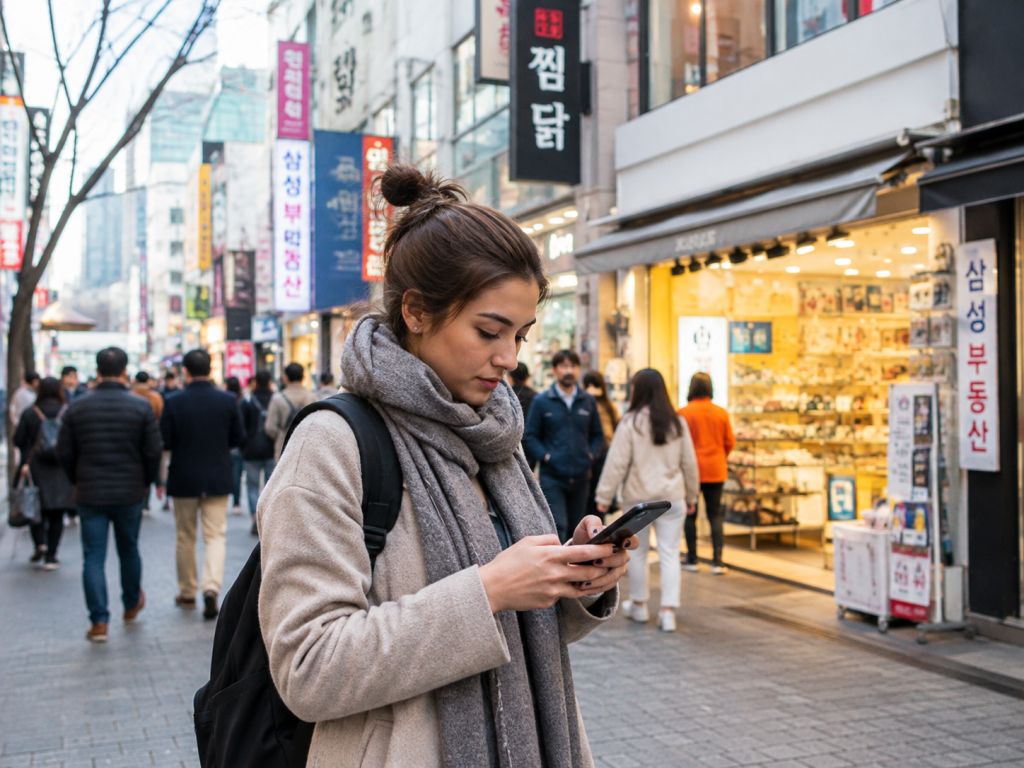
2. Get a T-money Card
If you are going to use Seoul’s subway or buses, a T-money card makes traveling much easier.
You can buy one at many convenience stores and recharge it with money.
It can be used on Seoul buses and subways, and transportation-card users can also receive transfer benefits when moving between buses and subways.
Just remember one important thing:
Tap your card when you enter AND when you exit.
This is especially important when riding buses.
What about the Climate Card?
Visitors staying in Seoul for several days may also want to compare the Climate Card short-term passes.
As of August 2026, Seoul offers 1-, 2-, 3-, 5-, and 7-day short-term Climate Card passes for unlimited rides within the eligible transportation network.
If you plan to take public transportation many times each day, it may be worth comparing with a regular T-money card.
3. Incheon Airport Is Not Actually in Central Seoul
This surprises some first-time visitors.
Incheon International Airport is outside central Seoul, so don’t book a restaurant or activity immediately after your scheduled arrival time.
Immigration, baggage collection, transportation, and hotel check-in can take longer than expected.
One of the easiest transportation options is the AREX Airport Railroad, which connects Incheon Airport with Seoul.
There are both all-stop and express services to Seoul Station.
If your hotel is around Myeongdong, Hongdae, or Seoul Station, airport rail or an airport bus can often be convenient.
Local Tip:
After a long flight with large luggage, I would choose convenience over saving a few dollars.
4. Choose Your Hotel Area Carefully
Seoul is huge.
Choosing the right neighborhood can save you a lot of travel time.
For first-time visitors, these three areas are especially popular:
| Area | Best For | Atmosphere |
|---|---|---|
| Myeongdong click | First-time visitors, shopping | Central & convenient |
| Hongdae | Young travelers, nightlife | Trendy & lively |
| Gangnam | Shopping, cafés, upscale hotels | Modern & stylish |
Personally, if someone asks me where to stay on their first-ever Seoul trip, I usually recommend somewhere around Myeongdong or central Seoul.
It makes visiting major attractions much easier.
👉 Coming soon: Where to Stay in Seoul – Myeongdong vs Hongdae vs Gangnam
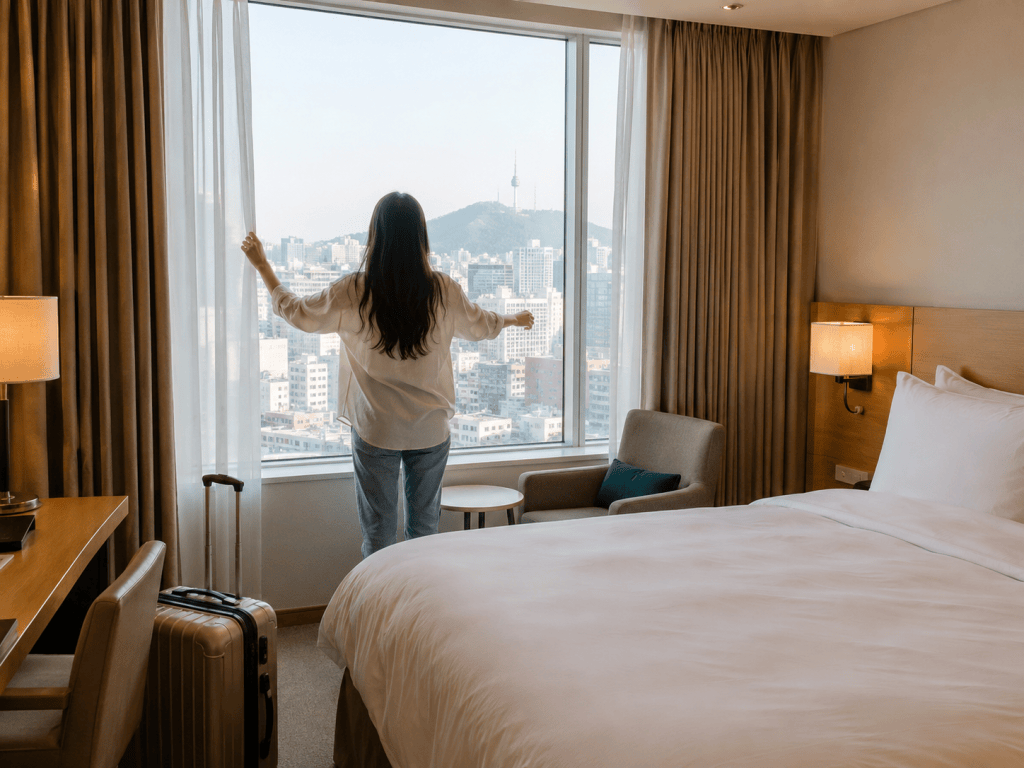
5. Don’t Be Afraid of the Seoul Subway
The subway map looks intimidating at first.
But once you ride it a few times, it becomes surprisingly easy.
Stations have numbered exits, and signage commonly includes English.
One thing that makes a huge difference is checking the exit number before leaving the station.
For example:
“Gangnam Station” is not enough.
You might need Gangnam Station Exit 11.
Walking out of the wrong exit can easily add another 10–15 minutes to your walk.
6. Carry a Little Cash
Korea is very card-friendly.
Hotels, restaurants, cafés, department stores, and convenience stores usually accept cards.
Still, I recommend carrying a small amount of Korean won.
Cash can occasionally be useful for:
- Traditional markets
- Small street-food stalls
- Transportation card top-ups
- Small independent businesses
- Emergency situations
You don’t need to walk around with a huge amount of cash.
For most travelers, cards plus a small amount of KRW is the easiest combination.
Official Seoul tourism information also recommends using banks or government-certified exchange booths when exchanging currency.
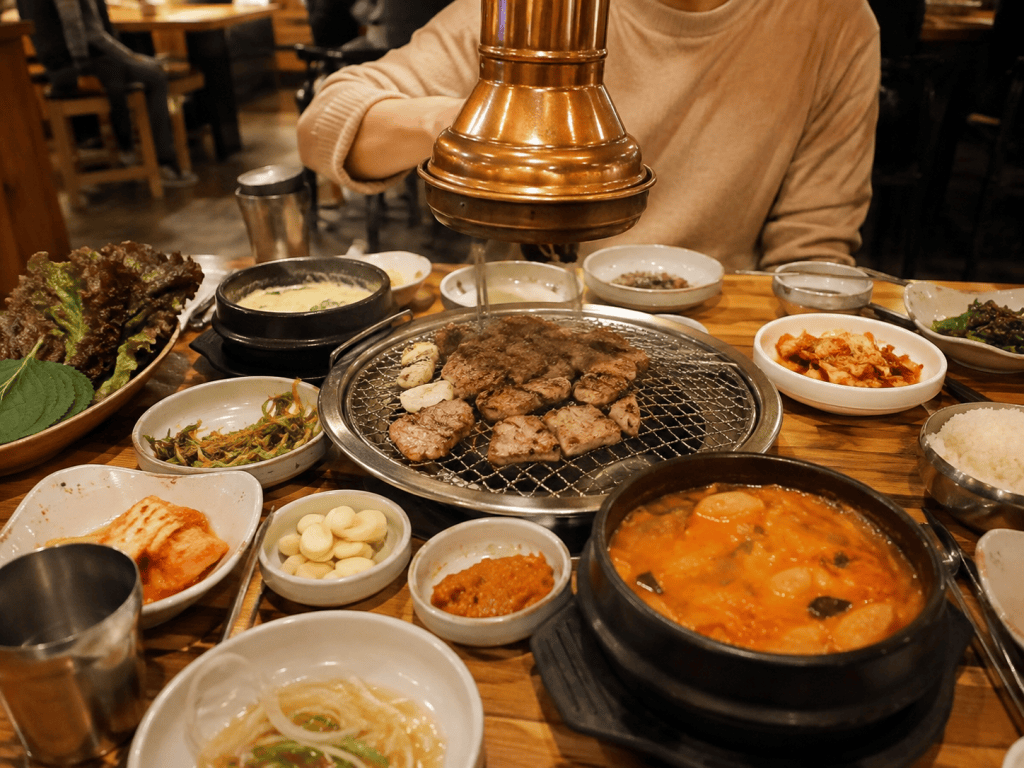
7. Tipping Is Not Expected in Korea
This is one of the biggest differences for visitors from countries such as the United States.
In Korea, you normally do not need to tip at restaurants, cafés, taxis, or salons.
Just pay the amount shown.
Official Seoul tourism guidance also notes that tipping is not a traditional Korean custom.
So if your meal costs ₩30,000, paying ₩30,000 is completely normal.
No calculator required.
8. Don’t Only Eat in Famous Tourist Areas
Myeongdong is fun.
Insadong is worth visiting.
And yes, you should absolutely try Korean barbecue.
But don’t spend your entire trip eating at restaurants directly next to famous attractions.
Some of my favorite Seoul neighborhoods for food include:
Euljiro
Great for old-school restaurants, Korean BBQ, and trendy bars hidden inside older buildings.
Seongsu
One of Seoul’s trendiest areas for cafés, bakeries, pop-ups, and restaurants.
Mangwon
Great for markets and a more local neighborhood atmosphere.
Jamsil & Songpa
A mix of local restaurants, cafés, shopping, and easy access to Seokchon Lake and Lotte World.
Sometimes the best meal on your trip will be in a restaurant with no English sign outside.
👉 Coming soon: Seoul Restaurants Locals Actually Love
9. Convenience Stores Are Part of the Experience
Please don’t think of Korean convenience stores as only places to buy water.
CU, GS25 and 7-Eleven can practically become part of your Seoul itinerary.
Try:
- Korean instant ramen
- Triangle kimbap
- Banana milk
- Korean beer
- Ice cream
- Convenience-store coffee
- Snacks
- Ready-made meals
One of the simplest Seoul experiences is buying ramen and snacks and eating them near the Han River.
It’s inexpensive, casual, and very Korean.
10. Learn These Five Korean Words
You can travel around Seoul without speaking Korean.
But knowing a few words makes things much easier.
안녕하세요 – Annyeonghaseyo
Hello
감사합니다 – Gamsahamnida
Thank you
주세요 – Juseyo
Please give me / I’d like this
얼마예요? – Eolmayeyo?
How much is it?
화장실 어디예요? – Hwajangsil eodiyeyo?
Where is the bathroom?
Even saying a simple “Gamsahamnida” after a meal is appreciated.
11. Korean Restaurants May Work Differently Than You Expect
Some Korean restaurants have rules that confuse first-time visitors.
For example, certain BBQ or hot-pot restaurants may require a minimum order of two portions.
Water and side dishes are sometimes self-service.
At some restaurants, you order using a tablet at your table.
At others, you order at a kiosk before sitting down.
And increasingly, some cafés and restaurants don’t take orders directly from a server at all.
Don’t worry if you aren’t sure what to do.
Look around for a moment and you’ll usually understand the system quickly.
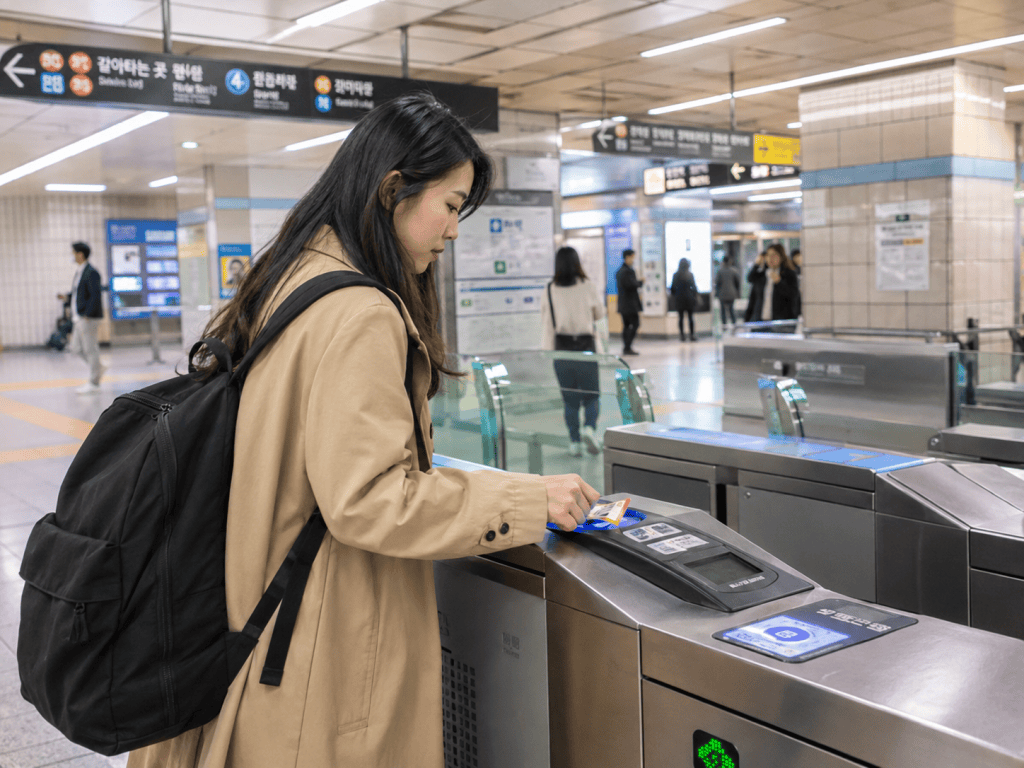
12. Use Kakao T for Taxis
If you need a taxi, Kakao T is one of the most useful apps in Korea.
It works similarly to ride-hailing apps used in other countries.
Taxis can be especially useful when:
- Your hotel is far from a subway station
- You have large luggage
- Public transportation has stopped running
- You are traveling with children or parents
- The weather is terrible
But during rush hour, the subway can actually be faster than driving.
That’s Seoul.
13. Check Tax Refunds When Shopping
Planning an Olive Young shopping spree?
Buying Korean skincare?
Shopping for clothes?
Look for stores offering tax refunds for international visitors.
Tax refund procedures can vary depending on the store and refund method, and airport refund services are also available for eligible purchases.
Always keep your receipts, and it is useful to carry your passport when planning a serious shopping day.
14. Seoul Has Four Very Different Seasons
What you pack depends heavily on when you visit.
Spring
March to May
Usually one of the most popular seasons for traveling.
Light jackets are useful, especially in the morning and evening.
Summer
June to August
Hot and humid.
Expect heat, rain, and strong air-conditioning indoors.
Autumn
September to November
One of my favorite times in Seoul.
The weather is often pleasant, and autumn foliage can be beautiful.
Winter
December to February
Cold and dry.
Bring a proper winter coat, especially if you plan to spend a lot of time outside.
Seoul officially has four distinct seasons, so checking the forecast shortly before your trip is important.
15. Don’t Try to See Everything
This might be the most important tip.
Many first-time visitors create an itinerary like this:
Gyeongbokgung Palace → Bukchon → Myeongdong → N Seoul Tower → Gangnam → Seongsu → Hongdae.
In one day.
Technically possible?
Maybe.
Enjoyable?
Probably not.
Seoul is much bigger than it looks on Instagram.
Instead, group attractions by area.
For example:
Central Seoul Day
Gyeongbokgung Palace
→ Bukchon
→ Insadong
→ Ikseondong
→ Myeongdong
East Seoul Day
Seongsu
→ Seoul Forest
→ Jamsil
→ Seokchon Lake
West Seoul Day
Hongdae
→ Yeonnam
→ Mangwon
→ Han River
You will spend less time underground on the subway and more time actually enjoying Korea.
Bonus: What I Would Do on My First Day in Seoul
If I were visiting Seoul for the first time, I would keep Day 1 simple.
After checking into the hotel:
Myeongdong → Cheonggyecheon Stream → Gwanghwamun → Korean BBQ → convenience-store snacks
No complicated itinerary.
No five neighborhoods in one afternoon.
Just walk around, eat something good, and get used to the city.
You’ll have plenty of time for the rest.
Final Thoughts
Seoul can feel overwhelming when you first look at the map.
But once you understand the subway, download the right apps, and stop trying to visit every famous attraction at once, traveling here becomes much easier.
And one more tip from a local:
Don’t only visit places that are famous on social media.
Explore a traditional market.
Walk into a neighborhood bakery.
Eat at a restaurant filled with Korean office workers.
Spend an evening beside the Han River.
Those small experiences often become the best memories from Korea.
I was born and raised in Seoul, and on this site I’ll share real restaurants, hotels, neighborhoods, and Korea travel tips from a local perspective.
Not just where tourists go — but places Koreans actually enjoy too.
Welcome to Seoul. 🇰🇷
More Seoul Travel Guides
- Where to Stay in Seoul: Myeongdong vs Hongdae vs Gangnam
- Best Hotels in Seoul for First-Time Visitors
- Seoul Restaurants Locals Actually Love
- How to Get from Incheon Airport to Seoul
- 3-Day Seoul Itinerary from a Local
- How to Use Naver Map in Korea
instagram. https://www.instagram.com/stepby_thom/?hl=ko


Leave a Reply